INTRODUCTION
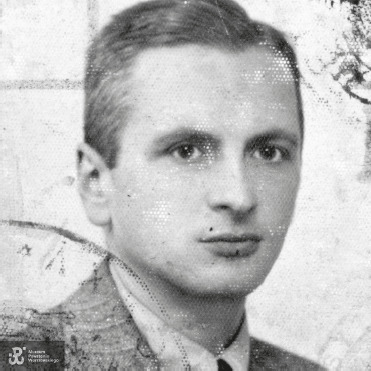
Jerzy Morawiecki was a Polish ophthalmologist and a major in the Polish People’s Army. He authored over 60 scientific publications dedicated to ophthalmic serology and immunopathology. This study aims to outline the profile of Jerzy Morawiecki, examine his scientific output, and evaluate his contribution to the development of Polish ophthalmology in the 20th century.
MATERIAL AND METHODS
This study draws upon source materials from the collections of the Warsaw Uprising Museum, the Library of the Medical University of Gdańsk, and the University Library of the University of Warmia and Mazury in Olsztyn. In addition, available digital archival records and publications by Jerzy Morawiecki were analyzed, with particular emphasis on his scientific contributions to ophthalmology.
BIOGRAPHY
Jerzy Morawiecki was born on 4 April 1910 in Berdychiv (now Ukraine) as the only child of Roman Morawiecki, a bookkeeper, and Stanisława Teodora née Wojciechowska. In 1928, he graduated from the Second State Gymnasium in Rzeszów and subsequently enrolled in the Faculty of Medicine at the Jagiellonian University in Kraków, where he studied from 1928 to 1935. As early as his second year of studies, he began working as an assistant at the university’s Department of History and Philosophy of Medicine, headed by the philosopher and medical historian Professor Władysław Szumowski (1875–1954), alongside Tadeusz Bilikiewicz (1901–1980), who would later become a professor of psychiatry.
In 1935, Morawiecki was called up for a one-year military service, which he completed as part of the Reserve Medical Officer Cadet School Course at the Sanitary Training Center in Warsaw. In September 1936, he completed the Advanced Course in Medical Microbiology and Epidemiology, organized by the State Institute of Hygiene (NIH) and the School of Hygiene in Warsaw. He subsequently transferred to the Faculty of Medicine at the University of Warsaw to continue his studies, where he earned his medical degree on 16 December 1937.
Following his graduation, he spent two years working as an assistant to Professor Ludwik Hirszfeld (1884–1954) – a physician, bacteriologist, and immunologist – in the Department of Bacteriology and Experimental Medicine at the NIH (now the National Institute of Public Health NIH – National Research Institute). In 1939, Jerzy Morawiecki defended his doctoral dissertation at the Faculty of Medicine of the University of Warsaw. However, the degree of Doctor of Medical Sciences was officially conferred upon him only after the end of the Second World War [1–10].
In September 1939, holding the rank of second lieutenant, Morawiecki took part in military operations, fighting in the battles of the Bzura and Kutno. Captured on 18 September in Iłów, he was subsequently interned as a prisoner of war in Oflag II A Prenzlau and later in Stalag III A Luckenwalde. Upon his release from captivity in 1940, he resumed his post at the NIH.
Despite the harsh realities of the German occupation, he continued his professional activities between 1941 and 1943 as a volunteer at the Department of Ophthalmology of the University of Warsaw, working initially under Professor Jan Lauber (1876–1952) and later under Professor Janusz Sobański (1902–1986). From 1943 until the outbreak of the Warsaw Uprising, he was employed at the Ophthalmic Institute, headed by Professor Władysław Henryk Melanowski (1888–1974).
Alongside his clinical work, Jerzy Morawiecki engaged in clandestine education, teaching students within the underground university network (the University of the Western Lands) [3, 5, 11].
During the Warsaw Uprising, he served as an Armia Krajowa (Home Army) physician under the nom de guerre “Lubicz”, affiliated with the medical service of the 1st “Radwan” District – “Krybar” Combat Group. He initially served at the Field Hospital on Kopernika Street and subsequently, as successive medical posts were destroyed, worked at aid stations at 3/5 Pierackiego Street (now Foksal Street), within the ruins of the Ophthalmic Institute, at the Main Hospital of the Polish Red Cross, and finally at the Wolski Hospital on Płocka Street [6].
Following the capitulation of the Warsaw Uprising, he was evacuated to Milanówek along with the staff of the Wolski Hospital. Immediately after the cessation of hostilities, he returned to the State Institute of Hygiene to assist in epidemiological efforts aimed at containing epidemic typhus. He later recounted his wartime experiences from the Warsaw Uprising in two published articles (Figures 1 and 2) [12, 13].
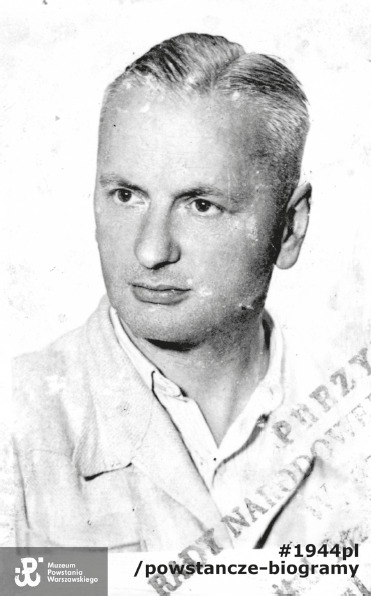
In 1945, Jerzy Morawiecki rejoined the Department of Ophthalmology at the University of Warsaw as a senior assistant, continuing both his clinical practice and academic teaching. Over the following years, he completed the first and second degrees of clinical specialization in ophthalmology, and on 14 June 1946 his degree of Doctor of Medical Sciences was formally conferred.
This phase of his scientific career peaked in 1950 with a two-month fellowship at the University Eye Clinic in Zurich under Professor Marc Amsler (1891–1968) [3, 11, 14].
In the autumn of 1952, Dr. Morawiecki was called up for active military service, serving as Head of the Ophthalmology Department first at the Military Hospital in Wałcz and subsequently at the Hospital of the Ministry of National Defense in Warsaw.
Despite his military obligations, he pursued scientific research, obtaining the postdoctoral degree of habilitated doctor (doctor habilitatus) at the Medical Academy of Warsaw in 1956 on the basis of his dissertation titled “Studies on the antiallergic action of riboflavin and the mechanism of its therapeutic effect in scrofulous ophthalmia”. On 1 October 1956, the Central Qualifying Committee appointed him Associate Professor (docent), and in 1957 he was transferred to the reserve with the rank of major [3, 6].
In 1962, Morawiecki relocated to Gdańsk to succeed Professor Ignacy Abramowicz (1890–1982) as head of the Department of Eye Diseases at the Medical Academy of Gdańsk. There, he initiated the expansion of the Department along with its diagnostic and therapeutic infrastructure. Key developments during this period included the establishment of a Contact Lens Laboratory headed by Dr. Zbigniew Jabłoński (d. 1998), the opening of an operating suite, and the acquisition of state-of-the-art ophthalmic equipment, including an argon laser installed in 1974. A Strabismus Treatment Clinic was also established under the direction of ophthalmologist Danuta Fabiszewska-Górna (1927–2015) [1–3].
On 6 July 1973, by resolution of the Council of State, he was awarded the academic title of Associate Professor, and he formally assumed the position of Associate Professor at the Medical Academy of Gdańsk on 1 August 1973. Although Jerzy Morawiecki officially retired on 30 September 1980, he remained actively involved in scientific research at the Medical Academy’s Department of Eye Diseases [2, 3].
Professor Morawiecki supervised four habilitation procedures:
A. Filipowicz-Banach (1927–2016), Rekonstrukcyjne le- czenie niedrożności kanalików łzowych [Reconstructive treatment of lacrimal canalicular obstruction] (1974);
B. Iwaszkiewicz-Bilikiewicz (1935–2011), Fotokoagulacja laserem argonowym zmian przedniego odcinka oka i ciała szklistego na podstawie własnych badań klinicznych i doświadczalnych [Argon laser photocoagulation of anterior segment and vitreous body lesions based on own clinical and experimental studies] (1978);
D. Fabiszewska-Górna (1927–2015), Badania kliniczne nad etiologią zeza zbieżnego towarzyszącego [Clinical studies on the etiology of concomitant esotropia] (1978);
J. Jabłoński (1939–2006 ), Badania farmakologiczne i histochemiczne nad układem adrenergicznym oka [Pharmacological and histochemical studies on the adrenergic system of the eye] (1979).
He also served as the supervisor for doctoral dissertations defended by:
H. Janukowicz (1931–2024), Adaptacja narządu wzroku do ciemności w zespole napięcia przedmiesiączkowego [Dark adaptation of the visual organ in premenstrual syndrome] (1966);
B. Iwaszkiewicz-Bilikiewicz (1935–2011 ), Późne wyniki operacji zaćmy wrodzonej u dzieci [Late results of congenital cataract surgery in children] (1967);
J. Burau (1920–2005), Analiza zmian barwnikowych występujących wokół tarczy nerwu wzrokowego po wstrząsie siatkówki [Analysis of pigmented changes around the optic disc following commotio retinae] (1971);
T. Kruszczyński (1924–2007), Badania nad wydzielaniem 3,4-dwuhydroksyfenyloalaniny (DOPA) w moczu ludzi chorych na czerniaka złośliwego narządu wzroku [Studies on urinary excretion of 3,4-dihydroxyphenylalanine (DOPA) in patients with malignant melanoma of the visual organ] (1972);
J. Jabłoński (1939–2006), Badania nad jednoczesnym działaniem gwanetydyny i katecholamin na mięsień rozwie- racz źrenicy [Studies on the concurrent action of guanethidine and catecholamines on the pupillary dilator muscle] (1972);
J. Wróblewski, Ocena krytyczna operacji Preziesego-Scheina- Malbrana w leczeniu jaskry przewlekłej [Critical evaluation of the Preziosi–Scheie–Malbran procedure in the treatment of chronic glaucoma] (1979);
B. Pankowska, Wpływ glikokortykoidów na doświadczalne uczuleniowe zapalenie błony naczyniowej u królika [Effect of glucocorticoids on experimental allergic uveitis in rabbits] (1979);
K. Raczyńska (b. 1945), Wpływ chlormadinanu na siatkówkę samic szczura białego [Effect of chlormadinone on the retina of female white rats] (1979);
A. Świca-Gardzilewicz (1942–2025), Zastosowanie ultradźwiękowej metody Dopplerowskiej w diagnostyce neurookulistycznej [Application of the Doppler ultrasound technique in neuro-ophthalmic diagnostics] (1979) (Figures 3 and 4) [1–3].
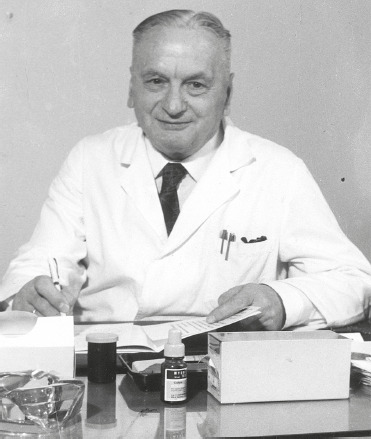
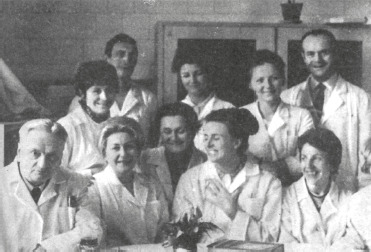
Figure 4
Professor Jerzy Morawiecki among his assistants (1972). From left: Ewa Kossak, Anna Pawlikowska, Tadeusz Kruszczyński, Irena Mielnik, Irena Łunkiewicz, Halina Muczyń-Janukowicz, Krystyna Piasecka, Helena Morawska, Zbigniew Jabłoński [1]
Jerzy Morawiecki was an active scholar and public figure. He was fluent in German and possessed a solid command of both English and French. His academic pursuits led him on numerous international visits, including to Zurich, Switzerland (1950), Amsterdam, Netherlands (1968), and London, United Kingdom (1970), as well as to Hamburg, Heidelberg, and Düsseldorf, Germany. He was an honorary member of the German Ophthalmological Society (Deutsche Ophthalmologische Gesellschaft) and the French Ophthalmological Society (Société Française d’Ophtalmologie). From 1958 onward, he served as a regular reviewer and abstractor of Polish scientific literature for the German journal Zentralblatt für die gesamte Ophthalmologie, for which he prepared several hundred abstracts in German.
Between 1962 and 1980, Jerzy Morawiecki chaired the Gdańsk Branch of the Polish Ophthalmological Society, which later granted him honorary membership in 1980. During his tenure as chair, he organized three nationwide scientific congresses of the Polish Ophthalmological Society. In addition, he served on the editorial board of Klinika Oczna/Acta Ophthalmologica Polonica and was a member of the Polish Society of the History of Medicine, the Healthcare Workers’ Trade Union, and the Polish–Soviet Friendship Society [1–3].
For his professional and public contributions, Morawiecki received numerous state and institutional honors. These included the Medal of the 10th Anniversary of People’s Poland (20 June 1955), the Knight’s Cross of the Order of Polonia Restituta (29 September 1976), the Commemorative Medal of the 30th Anniversary of the Medical Academy of Gdańsk (1978), the Badge “For Exemplary Work in Health Service” (1980), the Medal “For Participation in the Defensive War of 1939” (1 September 1982), and the Warsaw Uprising Cross (29 January 1986) (Figures 5 and 6) [2, 5].
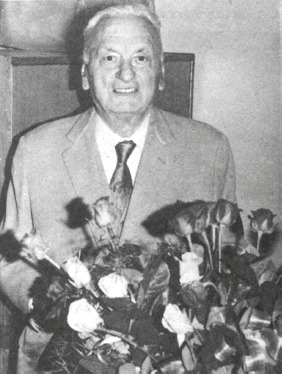
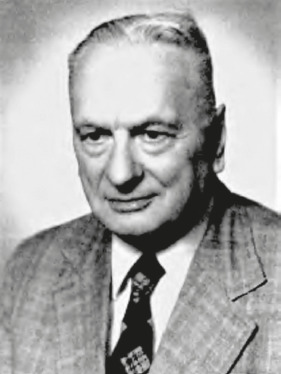
Professor Morawiecki passed away on 2 March 1997 in Gdańsk and was laid to rest in the family grave of Stanisława and Roman Morawiecki at Powązki Cemetery in Warsaw (Old Powązki; plot 140, row 5, gravesite 23–24) [2, 3]. He was survived by his daughter, Maria Szymczak.
REVIEW OF SCIENTIFIC ACHIEVEMENTS
Jerzy Morawiecki’s scientific output comprises 61 publications, the most significant of which are discussed below.
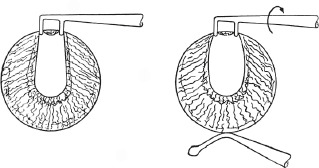
His early experimental research in ophthalmic serology and immunopathology, focusing in particular on anaphylactic keratitis in animal models, set the course for his later academic pursuits [15–23]. In a 1958 paper [17], he presented in detail the findings of in vivo studies conducted on rabbits, carried out in the laboratory of Professor Ludwik Fleck (1896–1961) – a Polish microbiologist, immunologist, and philosopher of science – under his supervision [24–26]. In two separate papers, Morawiecki investigated therapeutic approaches to vitreous hemorrhage using anti-Rh serum [27, 28]. In a 1967 publication, he introduced an original, custom-designed pupillary dilator for use during cataract surgery [29], providing both a technical drawing of the instrument (Figure 7) and a description of its operative application (Figure 8).
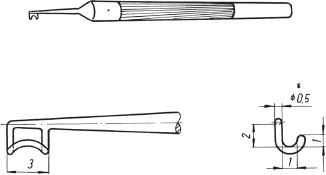
Figure 8
Additional pupil dilation achieved by compression with a strabismus hook. The arrow indicates the direction of handle rotation when removing the instrument [29]
In 1970, he published a study evaluating the use of eyelid traction sutures in cataract surgery. A year later, he authored an obituary commemorating Alfred Kleczkowski (1908–1970), a Polish scholar specializing in photobiology, virology, and genetics [30, 31].
LIST OF SCIENTIFIC PUBLICATIONS AUTHORED BY JERZY MORAWIECKI
Grochmal S, Morawiecki J, Pankiewicz E, Połuchtowicz P, Widy W (eds.). Echa minionych dni: jednodniówka Bataljonu Szkolnego Podchorążych Sanitarnych Rezerwy [Echoes of past days: a one-off publication of the Reserve Medical Officer Cadet School Battalion]. Druk. S. Niemiry Syn pod zarz. J. Puchalskiego, Warsaw 1936.
Morawiecki J. Ueber die schwachen Bluteigenschaften und ihre Bedeutung bei der Bestimmung der Blutspender. Schweiz Med Wochenschr 1941; 71: 110-111.
Morawiecki J. Słabo zaznaczone cechy grupowe krwi i ich zna- czenie przy określaniu dawców [Weakly expressed blood group characteristics and their significance in donor selection]. Pol Tyg Lek 1946; 1: 369-372.
Morawiecki J, Piasecka J. Rozpoznawcze znaczenie bakterio- fagów swoistych w durze brzusznym i czerwonce bakteryjnej [Diagnostic significance of specific bacteriophages in typhoid fever and bacillary dysentery]. Pol Tyg Lek 1947; 2: 1326-1329.
Morawiecki J. Współczesne poglądy na istotę zarazków przesączalnych [Contemporary views on the nature of filterable agents]. Pol Tyg Lek 1947; 2: 625-628.
Morawiecki J. Ludzie, którzy nie widzą barw [People who cannot see colors]. Problemy 1948; 4: 323-326.
Morawiecki J. O odczynie Weil-Felixa w jaglicy [On the Weil-Felix reaction in trachoma]. Pol Tyg Lek 1948; 3: 145-148.
Morawiecki J. Alergia i odporność w przebiegu doświadczalnej gruźlicy oczu [Allergy and immunity in the course of experimental ocular tuberculosis]. Pol Tyg Lek 1949; 4: 338-340.
Morawiecki J. Badania nad przeciwbakteryjnym (inhibicyjnym) działaniem kału ludzkiego i śliny [Studies on the antibacterial (inhibitory) activity of human feces and saliva]. Med Dosw Mikrobiol 1949; 1: 86-105.
Morawiecki J. Leczenie zołzowatych zapaleń oczu za pomocą nowych środków przeciwalergicznych [Treatment of scrofulous ophthalmia with new antiallergic agents]. Pol Tyg Lek 1949; 4: 1224-1226.
Morawiecki J. Klinika Okulistyczna AM w Warszawie zwalcza zołzowate zapalenie oczu [Department of Ophthalmology of the Medical Academy in Warsaw combats scrofulous ophthalmia]. Służba Zdrowia 1951; 3: 2.
Morawiecki J. Sprawozdanie z pobytu w Szwajcarii [Report on the stay in Switzerland]. Klin Oczna 1951; 21: 226-227.
Morawiecki J. Badania nad przeciwalergicznymi właściwościami witaminy B12 i mechanizmem jej leczniczego działania w zoł- zowatym zapaleniu płuc [Studies on the antiallergic properties of vitamin B12 and the mechanism of its therapeutic action in scrofulous pneumonia]. Towarzystwo Naukowe Warszawskie 1952; 39.
Morawiecki J. Behandlung der skrofulösen Augenentzündungen mit neuen antiallergischen Mitteln. Schweiz Med Wochenschr 1952; 82: 90-91.
Morawiecki J, Rudowski W. Leczenie naczyniaków jamistych po- wiek wstrzykiwaniami wody [Treatment of cavernous hemangiomas of the eyelids with water injections]. Pol Tyg Lek 1952; 7: 789-793.
Morawiecki J, Rudowski W. Behandlung der cavernösen Lidhämangiome mit Einspritzungen von siedendem Wasser. Schweiz Med Wochenschr 1953; 83: 1139-1140.
Morawiecki J. Behandlung der skrofulösen Augenentzündung mit Privin-Cibazol-Emulsion. Ophthalmologica 1953; 126: 122-125.
Morawiecki J, Bogusławska M. Leczenie zołzowatego zapalenia oczu emulsją prywinowo-cibazolową [Treatment of scrofulous ophthalmia with Privine-Cibazol emulsion]. Pol Tyg Lek 1953; 8: 1181-1183.
Morawiecki J. Gruźlica oka i zołzy oczne. Streszczenie koreferatu [Ocular tuberculosis and scrofulous ophthalmia. Summary of a co-report]. Klin Oczna 1954; 23: 145-146.
Morawiecki J. Recenzja: Vanysek J. O physiologii a pathologii Lidského elektroretinogramu [Review: Vanýsek J. On the physiology and pathology of the human electroretinogram]. Praha 1954. Klin Oczna 1954; 24: 236-238.
Morawiecki J. Ein Beitrag zur antibakteriellen Wirkung des Speichels. Schweiz Z Pathol Bakteriol 1955; 18: 38-41.
Morawiecki J. Zur Frage der antiallergischen Wirkung des Riboflavins (Vitamin B2). Ophthalmologica 1955; 129: 396-399.
Morawiecki J, Rudowski W. Naczyniaki jamiste powiek leczone wstrzykiwaniem wrzącej wody [Cavernous hemangiomas of the eyelids treated with boiling water injections]. Klin Oczna 1955; 25: 67.
Morawiecki J. Niektóre zagadnienia immunologii i patologii rogówki w świetle nowych danych doświadczalnych [Selected aspects of corneal immunology and pathology in light of new experimental data]. In: Referaty XXV Zjazdu Okulistów Polskich. Lublin 1956. Polskie Towarzystwo Okulistyczne, Warszawa 1956; 300-306.
Morawiecki J. Präzipitationserscheinungen in der lebenden Hornhaut bei Antigen-Antikörper-Reaktionen. Ophthalmologica 1956; 132: 236-243.
Morawiecki J. Badania nad precypitacją antygenów i przeciwciał w żywej rogówce [Studies on the precipitation of antigens and antibodies in the living cornea]. Rozprawy Wydziału Nauk Medycznych Polskiej Akademii Nauk 1958; 3: 67-84.
Morawiecki J. List do redakcji: Miratyńska-Rusinowa E. Wyniki ope- racyjnego leczenia jaskry sposobem uwięźnięcia tęczówki [Letter to the editor: Miratyńska-Rusinowa E. Outcomes of surgical treatment of glaucoma by iridencleisis]. Klin Oczna 1960; 30: 402.
Morawiecki J, Brzosko W. Badania nad precypitacją znakowanych antygenów w rogówce żywego oka [Studies on the precipitation of labeled antigens in the cornea of the living eye]. Pol Tyg Lek 1961; 16-17: 624-625.
Morawiecki J, Brzosko W. Modellstudien zur Antigen-Antikörper- Prezipitation in der lebenden Hornhaut. Ophthalmologica 1961; 142: 614-618.
Morawiecki J. Investigations on the precipitation of antigens and antibodies in living corneae. In: Theses of the Section of Medical Sciences. Państwowe Wydawnictwo Naukowe, Warsaw 1962; 45-57.
Morawiecki J, Kettesy A. O pozasiatkówkowym składniku optycz- nego rozpoznania [On the extraretinal component of optical perception]. Pol Tyg Lek 1963; 18: 667-670.
Morawiecki J, Fabiszewska-Górna D. Ein Beitrag zur Genese der optischen Diskontinuitätszonen der Augenlinse. Ophthalmologica 1964; 148: 241-246.
Morawiecki J, Fabiszewska-Górna D. Przyczynek do biomikroskopii soczewki oka człowieka [A contribution to the biomicroscopy of the human crystalline lens]. Folia Morphol 1965; 24: 381-386.
Morawiecki J, Fabiszewska-Górna D. Ein Iris-Elevator zur Pupillenerweiterung bei der Kryoextraktion der Augenlinse. Klin Monatsbl Augenheilkd 1967; 150: 76-77.
Morawiecki J, Fabiszewska-Górna D. Uwagi o mechanicznym rozszerzaniu źrenicy w przebiegu operacji zaćmy z demonstracją przyrządu własnego pomysłu [Remarks on mechanical pupil dilation during cataract surgery with a demonstration of an instrument of the author’s own design]. Klin Oczna 1967; 37: 871-874.
Morawiecki J. Postępy diagnostyki i terapii urazów i schorzeń zawodowych oka [Advances in the diagnosis and therapy of occupational eye injuries and diseases]. Klin Oczna 1968; 38: 15-19.
Morawiecki J, Jabłoński J. Usuwanie rdzy z rogówki za pomocą środków farmakologicznych [Removal of corneal rust using pharmacological agents]. Klin Oczna 1968; 38: 491-493.
Morawiecki J. Wrażenia z pobytu w uniwersyteckiej klinice okulistycznej w Amsterdamie [Impressions from a stay at the university ophthalmology clinic in Amsterdam]. Klin Oczna 1969; 39: 641-642.
Morawiecki J. Recenzja: Segal P. Grzybicze choroby oka [Review: Segal P. Fungal diseases of the eye]. Warsaw 1968. Pol Tyg Lek 1969; 24: 1592.
Morawiecki J. Badania nad anafilaktycznym zapaleniem rogówki [Studies on anaphylactic keratitis]. Pol Tyg Lek 1970; 25: 1378-1379.
Morawiecki J, Jabłoński Z. Ein einfaches Gerät zur Spannung der Lidzügelnähte bei der Staroperation. Klin Monbl Augenheilkd 1970; 156: 220-222.
Morawiecki J, Jabłoński Z. Kilka uwag o stosowaniu powie- kowych szwów cuglowych w czasie operacji zaćmy [Some remarks on the use of eyelid traction sutures during cataract surgery]. Klin Oczna 1970; 40: 543-546.
Morawiecki J. Wspomnienie o Alfredzie Kleczkowskim [In me- moriam: Alfred Kleczkowski]. Pol Tyg Lek 1971; 26: 1556.
Morawiecki J. Recenzja: Wolter-Czerwińska H. Oczy zdrowe – oczy chore [Review: Wolter-Czerwińska H. Healthy eyes – diseased eyes]. Biul Główn Bibliot Lek 1971; 20: 542-543.
Morawiecki J. Nowe metody laboratoryjne i biologiczne w diagnostyce schorzeń narządu wzroku [New laboratory and biological methods in the diagnosis of ocular diseases]. Klin Oczna 1972; 42: 15-19.
Morawiecki J. Współczesne zagadnienia diagnostyki i terapii śródgałkowych czerniaków złośliwych [Current issues in the diagnosis and therapy of intraocular malignant melanomas]. Klin Oczna 1972; 42: 669-670.
Morawiecki J. Dr med. Angelina Kozakiewicz. Wspomnienie pośmiertne [In memoriam: Angelina Kozakiewicz, MD]. Klin Oczna 1973; 43: 357.
Morawiecki J, Wolter-Czerwińska H, Falkowska Z. Sprawozdanie z IV Zjazdu Europejskiego Towarzystwa Okulistycznego w Budapeszcie w dniach 17–21 kwietnia 1972 [Report on the 4th Congress of the European Ophthalmological Society in Budapest, 17–21 April 1972]. Klin Oczna 1973; 43: 341-344.
Morawiecki J. Immunologia narządu wzroku [Ocular immunology]. In: Bratkowska-Seniów B (ed.). Immunopatologia kliniczna. Państwowy Zakład Wydawnictw Lekarskich/State Medical Publishing House, Warsaw 1974; 373-384.
Morawiecki J. Współczesne problemy farmakologii naczyń krwionośnych oka [Contemporary problems in the pharmacology of ocular blood vessels]. Klin Oczna 1975; 45: 409-416.
Morawiecki J, Gardzilewicz A, Nowakowska E, Raczyńska K. Badania nad wpływem niekompletnych przeciwciał na erytrocyty znajdujące się w ciele szklistym. Doniesienie tymczasowe [Studies on the effect of incomplete antibodies on erythrocytes in the vitreous body. Preliminary report]. Klin Oczna 1979; 81: 175-176.
Morawiecki J, Gardzilewicz A, Raczyńska K. Über die Wirkung in- kompletter Antikörper auf im Glaskörper befindliche Erythrozyten. In: Jaeger W (ed.). Ionisierende Strahlen in der Augenheilkunde. Vol. 76, J. F. Bergmann-Verlag, München 1979; 533-535.
Morawiecki J, Gardzilewicz A, Nowakowska E, Raczyńska K. Badania nad wpływem przeciwciał anty-Rh na krwinki Rh+ znajdujące się w ciele szklistym [Studies on the effect of anti-Rh antibodies on Rh+ red blood cells in the vitreous body]. Klin Oczna 1980; 82: 37-38.
Morawiecki J. Teoretyczne podstawy seroterapii krwotoków do ciała szklistego [Theoretical foundations of serotherapy for vitreous hemorrhages]. Klin Oczna 1980; 82: 253-254.
Morawiecki J. Prof. dr med. Ignacy Abramowicz. Wspomnienie pośmiertne [In memoriam: Professor Ignacy Abramowicz, MD]. Klin Oczna 1983; 85: 310.
Morawiecki J. Behandlung von traumatischen Glaskörperblutungen bei Rh-positiven Patienten mit intravitrealer Injektion von Anti-Rh-Antikörpern. Fortschr Ophthalmol 1984; 81: 265-266.
Morawiecki J, Geursen R. Treatment of vitreous hemorrhage in Rh-positive patients by intravitreal injection of anti-Rho-immunoglobulin. Ophthalmic Res 1985; 17: 279-281.
Morawiecki J, Raczyńska K. Immunoterapia krwotoków śród- gałkowych pochodzenia nieurazowego [Immunotherapy of nontrau- matic intraocular hemorrhages]. Klin Oczna 1988; 90: 271-272.
Morawiecki J. Ze wspomnień powstańczego lekarza (I) [Memoirs of an insurgent physician (I)]. Gazeta AMG 1994; 4: 13-14.
Morawiecki J. Ze wspomnień powstańczego lekarza (II) [Memoirs of an insurgent physician (II)]. Gazeta AMG 1994; 4: 17-18.
Morawiecki J, Lipowski P. Badania nad mechanizmem powstawania linijnych precypitatów w przebiegu eksperymentalnej anafilaksji rogówki [Studies on the mechanism of linear precipitate formation in the course of experimental corneal anaphylaxis]. Ann Acad Med Gedan 1995; 25: 251-257.